

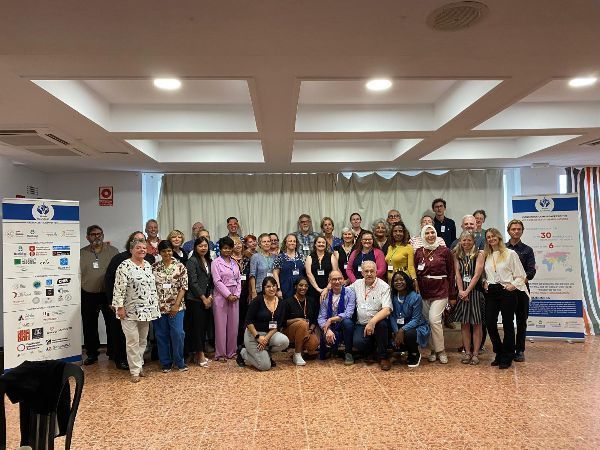
Experts from all six world regions of WHO, united by one purpose: improving the lives of people with deafblindness.
By the European Deafblind Network (EDbN)
Deafblindness is a distinct and complex condition. It is not simply the combination of hearing loss and sight loss. It can affect communication, orientation and mobility, access to information, relationships, daily activities and participation in society. Each person’s experience is different, and the support they need depends on their abilities, circumstances and environment.
Yet systems often assess hearing and vision separately. Definitions, eligibility rules and assessment practices may also vary between countries and services. As a result, a person’s overall situation can be overlooked, and access to support may depend on where they live or which professional they meet.
A shared language for complex needs
The World Health Organization’s International Classification of Functioning, Disability and Health (ICF) looks beyond diagnosis. It provides a framework for describing how a person functions in everyday life and how environmental factors can act as barriers or facilitators.
An ICF Core Set brings together the categories most relevant to a particular condition or context. It can help professionals, researchers, service providers and policymakers describe needs using a shared framework. It does not replace individual assessment or professional judgement; it helps make assessment more comprehensive and consistent.
For deafblindness, this means considering how a person communicates and receives information, moves around safely, carries out daily activities, maintains relationships and participates in their community. It also means recognising the role of communication support, interveners, assistive technology and accessible environments.
Research, lived experience and international consensus
The ICF Core Set for Deafblindness project brought together evidence and perspectives from across the world. Its development included a review of research, an international survey of professionals, qualitative work with people with lived experience and a multicentre clinical study. The findings were considered through an international consensus process in 2024. The project website describes the comprehensive set as containing 218 ICF categories. journals.sagepub.com
This process matters. A framework for a complex condition should not be based on one profession, one country or one person’s experience. It needs to bring together scientific evidence and the knowledge of people with lived experience, families, professionals and other stakeholders. That helps ensure the resulting categories reflect everyday life as well as clinical concerns.
Tools to support assessment and implementation
The project is now developing practical ways to use the Core Set. The ICF Assessment tool supports a structured assessment of indicators related to deafblindness. It can generate an ICF checklist with the results and, optionally, a certificate.
A future feature will help create a proposed individual programme of services, supporting planning for a person’s independent life. In parallel, EDbN is working on the ICF CS Rollout Project, an app and set of resources to support implementation of the ICF Core Set in practice. The aim is to help people with deafblindness and families, professionals, and advocacy organisations understand and use the framework.
A method other communities can explore
EDbN believes this process may be valuable to other communities whose conditions are complex, vary greatly from person to person, or cross the boundaries between established services. A structured Core Set process can help make needs more visible, identify gaps in evidence and build a common basis for cooperation across sectors and countries.
The value lies in the method: systematically gathering evidence, listening to people with lived experience, involving relevant expertise and reaching international consensus within a recognised framework. Each community’s Core Set would need to reflect its own condition and priorities.
We encourage organisations representing other complex conditions to explore whether the ICF approach could help their communities. EDbN is ready to share lessons from the deafblindness project, connect interested organisations with relevant experience and support initial discussions.
A common language can lead to clearer assessments, better coordinated support and stronger policy. For deafblind people, that means being recognised as a whole person, with their own priorities, strengths and support needs. For other communities, it could be an important step towards the same goal.